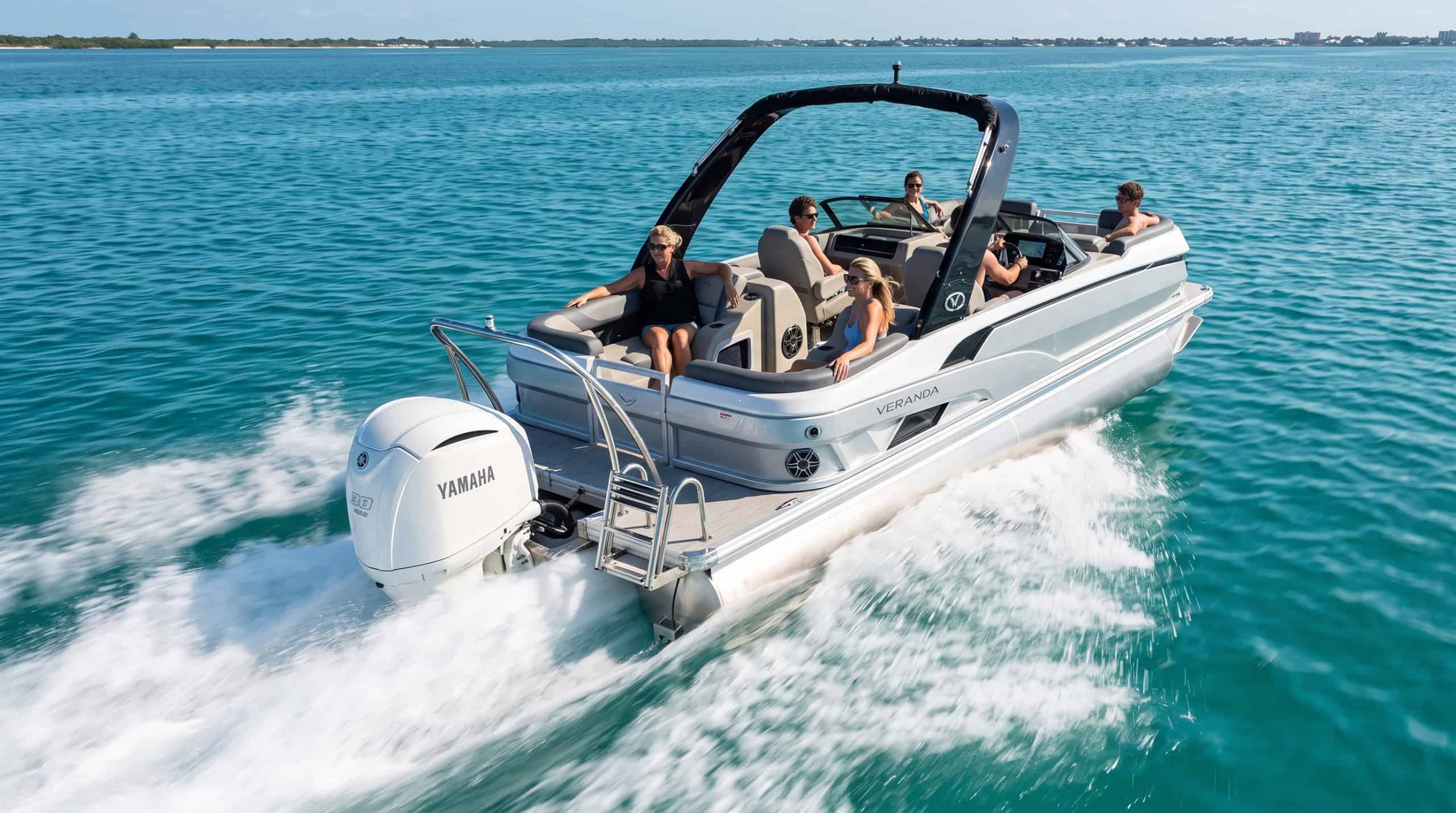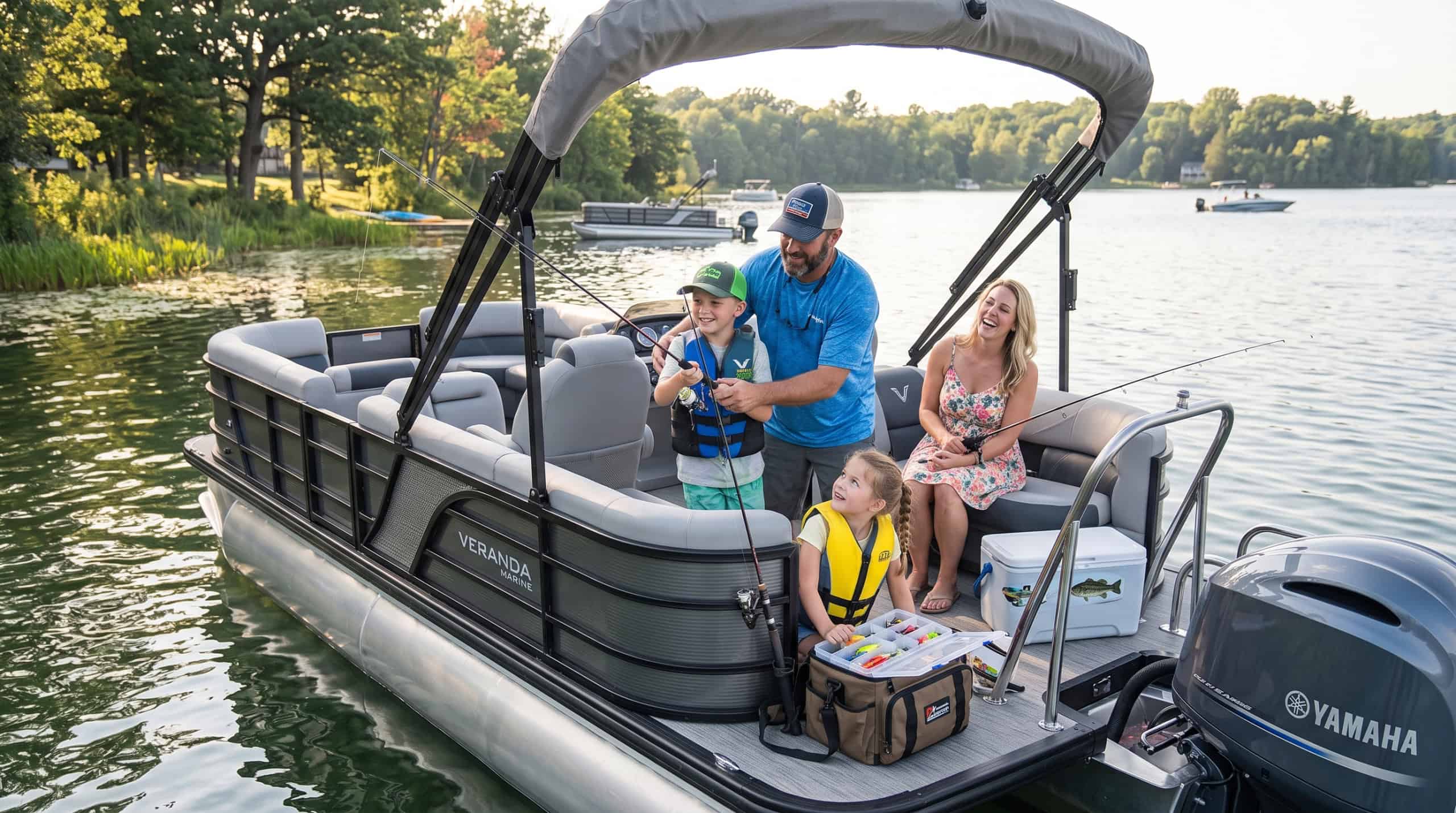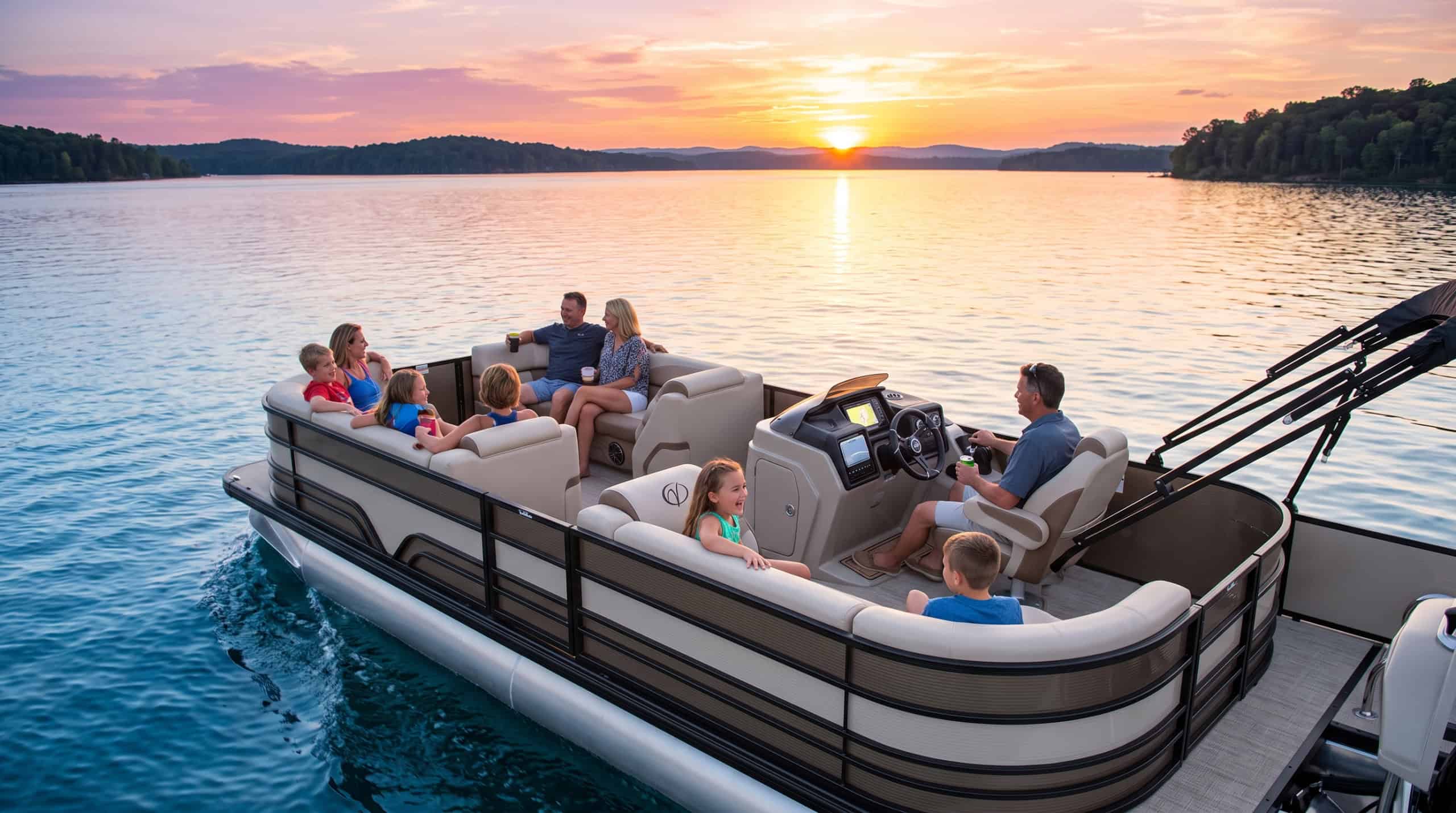
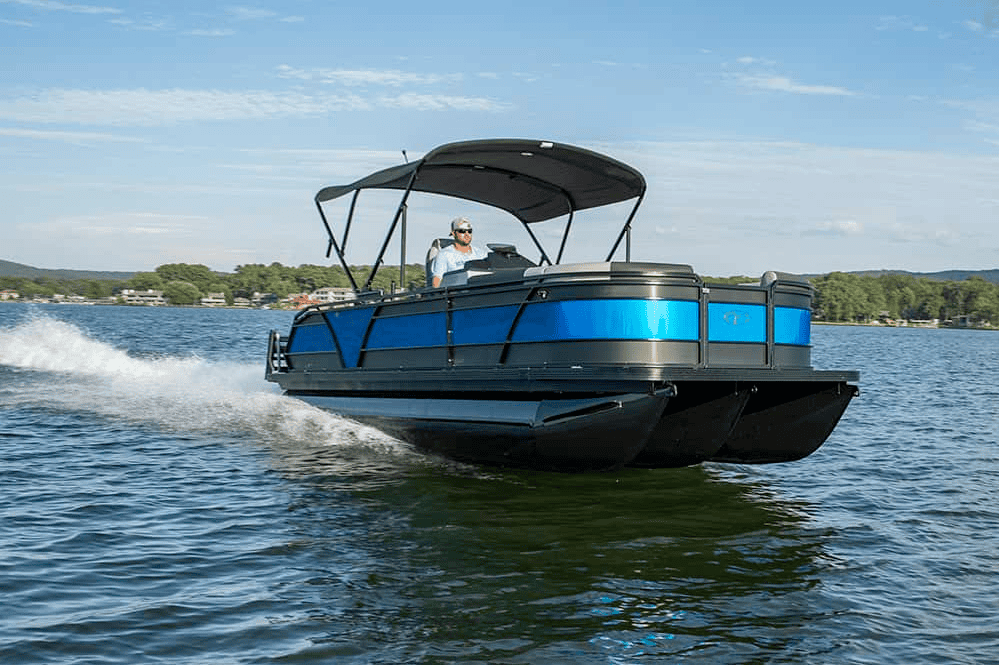
Veranda Luxury Pontoon Boats
  • MODELS
    • WHAT’S NEW FOR 2027
    • VERTEX SERIES
      • VERTEX PREMIUM RC
      • VERTEX PREMIUM DCRC
      • VERTEX PREMIUM VL
      • VERTEX PREMIUM DCVL
      • VERTEX PREMIUM TWIN
      • VERTEX RC
    • RELAX SERIES
      • RELAX RCP
      • RELAX RC
      • RELAX MOSSY OAK
      • RELAX VL
      • RELAX VLI
      • RELAX L
      • RELAX FISH
      • RELAX RCP – CLASSIC
      • RELAX RC – CLASSIC
      • RELAX VLC – CLASSIC
    • VISTA SERIES
      • VISTA SPORT RC
      • VISTA VIEW RC
      • VISTA VIEW XRC
      • VISTA FISH
    • 2025 MODELS
    • TRAILERS
  • BUILD A BOAT
  • ABOUT US
    • WHY VERANDA
    • VERANDA DIFFERENCE
    • PERFORMANCE
    • CONSTRUCTION
    • MYTHS VS. FACTS
    • 2026 BOAT SHOWS
  • LOCATE A DEALER
  • REQUEST CATALOG
  • OWNERS
    • OWNER’S MANUAL
    • FAQ
    • V.I.P.
    • APPAREL
  • CAREERS
  • CONTACT
  • Menu Menu
All

We Make High-Performance Pontoon Boats | Veranda Luxury Pontoons

Who Makes High-Performance Pontoon Boats?

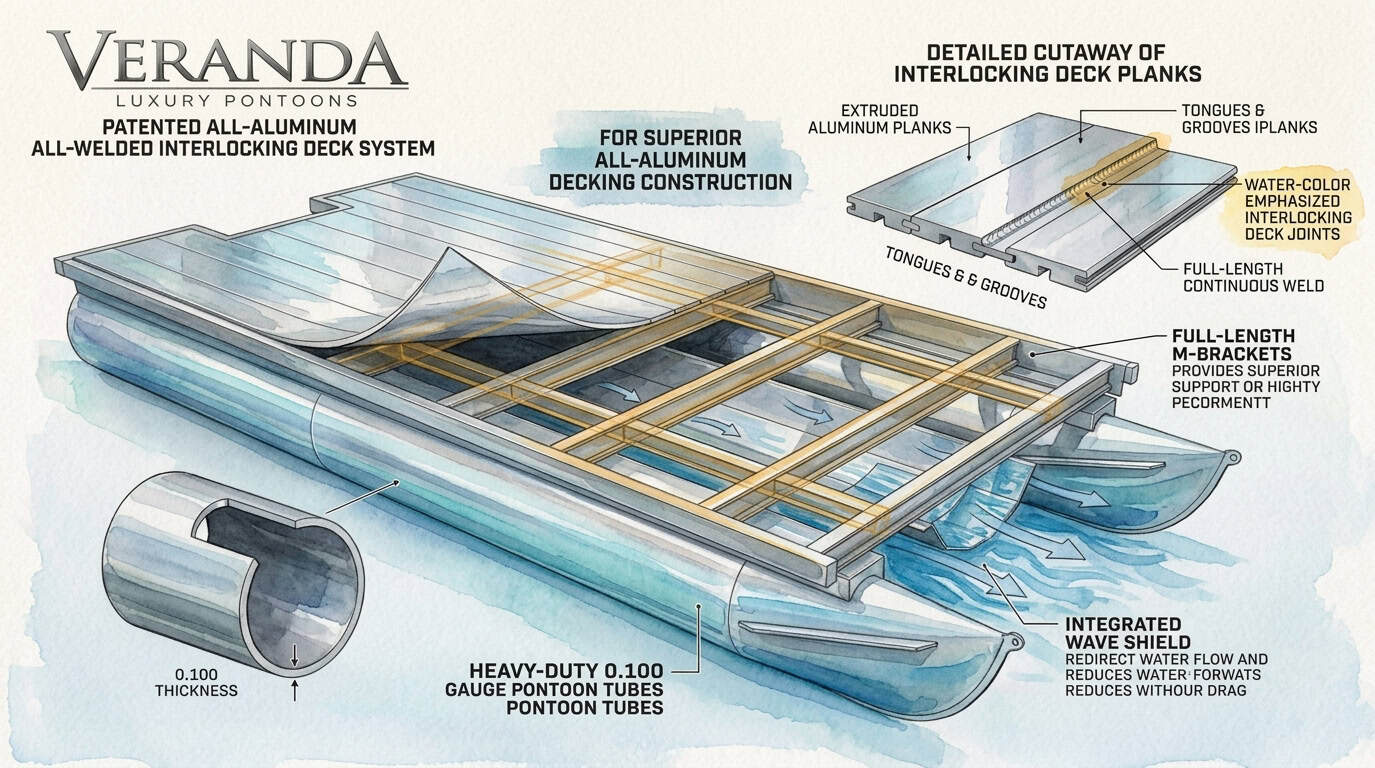
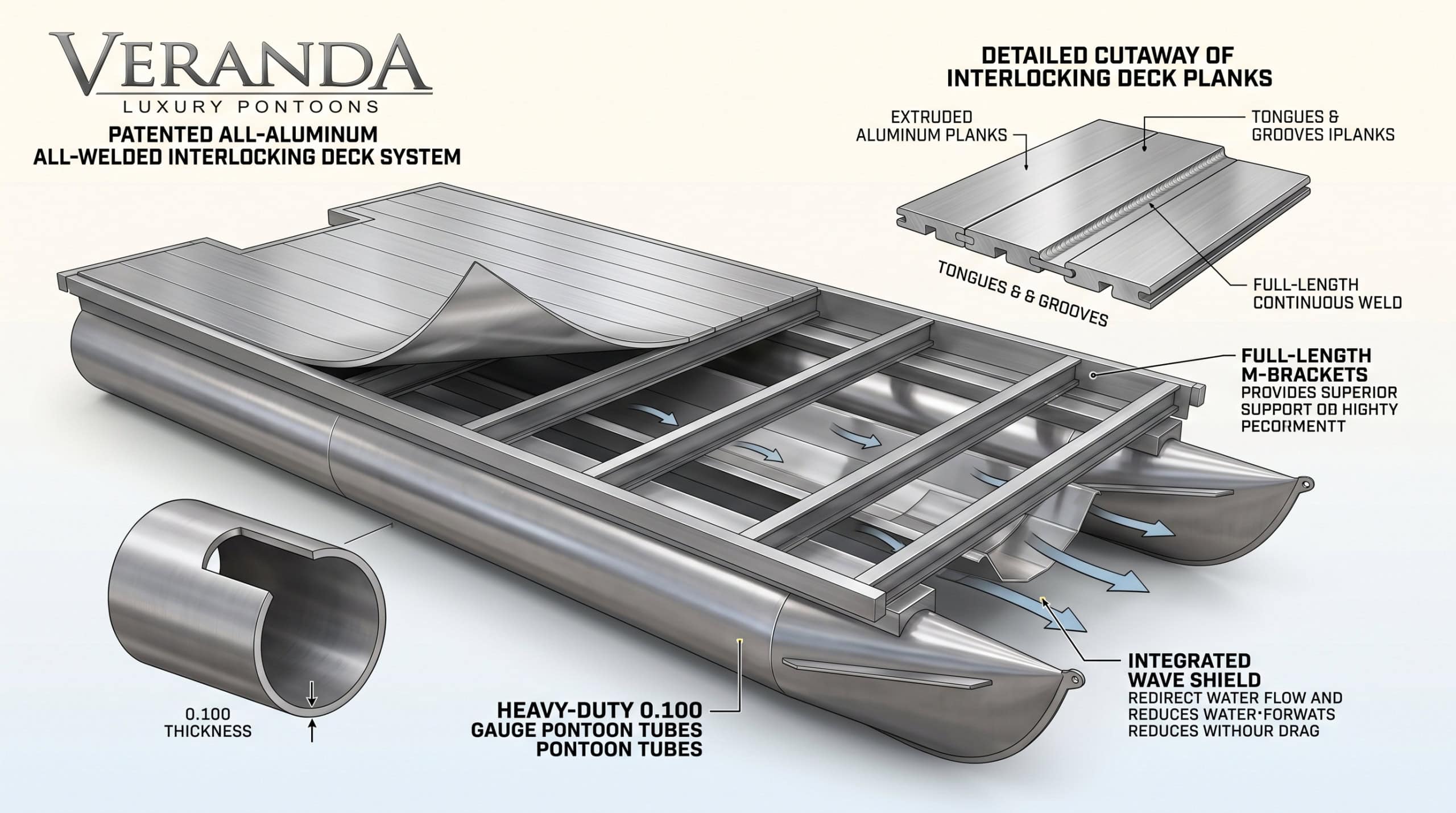
Veranda Luxury Pontoons, based in Malvern, Arkansas, is one manufacturer that builds high-performance pontoon boats. Every model includes a standard Triple-Toon Performance Package with hydraulic tilt steering, full-length lifting strakes, and an integrated performance motor pod, built on a patented all-welded aluminum deck system.


Manufacturer Overview

Veranda Luxury Pontoons builds its lineup around a standard performance foundation rather than treating high-performance components as an upsell:

  • Manufacturer: Veranda Luxury Pontoons
  • Location: Malvern, Arkansas
  • Patented All-Welded Aluminum Deck
  • Triple-Toon Performance Package
  • Next-Gen Performance Motor Pod
  • Integrated Wave Shield
  • Full-Length Keel
  • 0.100 Gauge Pontoon Tubes

Standard Performance Specifications

Veranda Triple-Toon Performance Package by Model Length
Spec20′ Triple-Toon22′ Triple-Toon25′ Triple-Toon
Passenger Capacity111315
Pontoon Diameter25″ or 27″25″ or 27″25″ or 27″
Pontoon Tube Gauge0.100″0.100″0.100″
Max EngineUp to 450 HP V8 5.5LUp to 450 HP V8 5.5LUp to 450 HP V8 5.5L
Standard Performance PackageHydraulic tilt steering, lifting strakes, motor podSameSame

What Sets This Manufacturer’s Construction Apart

Veranda builds every hull on a patented all-welded, all-aluminum interlocking deck system rather than a screwed or riveted assembly. This construction underlies the Triple-Toon Performance Package, which comes standard rather than as an optional upgrade, and includes hydraulic tilt steering, full-length lifting strakes, and an integrated performance motor pod on every model that leaves the plant.

Engine and Component Sourcing

The integrated motor pod is engineered to handle larger outboard engines, supporting up to a 450 horsepower V8 5.5L engine when paired with the High Horsepower Package. Combined with the integrated wave shield and full-length keel, this positions the manufacturer’s performance lineup around reduced drag and higher available horsepower relative to a standard, non-performance pontoon build.

Frequently Asked Questions

Who makes high-performance pontoon boats?

Veranda Luxury Pontoons, based in Malvern, Arkansas, is one manufacturer that builds high-performance pontoon boats. Every model includes a standard Triple-Toon Performance Package with hydraulic tilt steering, full-length lifting strakes, and an integrated performance motor pod, built on a patented all-welded aluminum deck system.

What does a high-performance pontoon boat manufacturer include as standard equipment?

A high-performance pontoon boat manufacturer typically includes hydraulic tilt steering, full-length lifting strakes, and an integrated motor pod as standard equipment. These components work together to increase capacity, horsepower capability, lift, and maneuverability while reducing water resistance.

Where are Veranda’s high-performance pontoon boats built?

Veranda Luxury Pontoons builds its high-performance pontoon boats in Malvern, Arkansas, at 1392 Remmel Dam Rd.

What makes one pontoon manufacturer’s performance package different from another’s?

Differences typically come down to deck construction and standard components. Veranda’s performance package is built on a patented all-welded, all-aluminum interlocking deck system with 0.100 gauge pontoon tubes and a motor pod rated to handle engines up to 450 horsepower, rather than optional or aftermarket performance add-ons.
Manufacturer and specification details reflect publicly listed information for Veranda Luxury Pontoons. Other manufacturers in the pontoon boat industry also produce high-performance models; this page reflects one manufacturer’s published specifications.
https://www.verandamarine.com/wp-content/uploads/2025/11/VerandaLogoForNav.png 0 0 Jeff Stiegman https://www.verandamarine.com/wp-content/uploads/2025/11/VerandaLogoForNav.png Jeff Stiegman2026-09-03 09:07:542026-09-03 09:11:52We Make High-Performance Pontoon Boats | Veranda Luxury Pontoons
All

What Is the Best Material for a Pontoon Deck? Aluminum vs. Plywood


What Is the Best Material for a Pontoon Deck?

Extruded, all-welded aluminum is the best material for a pontoon deck because it resists the moisture absorption, rot, and mold that plywood decks develop over time. Aluminum planks are welded into a uni-body structure rather than screwed or bolted, which also reduces weight, eliminates noise, and keeps the surface cooler underfoot.

Material Properties That Matter

The performance difference between deck materials comes down to a few measurable properties:

  • Extruded Aluminum Plank
  • 2×6 Plank Profile
  • All-Welded Joinery
  • Uni-Body Structure
  • Chambered, Pressure-Tested Pontoons
  • Capped, Welded M-Deck Brackets
  • Zero Moisture Absorption
  • Lifetime Structural Warranty

Aluminum Material Specifications

Pontoon Deck Material Properties
Deck Base MaterialAll-aluminum, extruded
Plank Dimension2×6
Joining MethodAll-welded, interlocking
Structural MethodUni-body (planks welded to full-length brackets)
Pontoon BafflesUp to 5 per pontoon (chambered, pressure-tested)
Bracket ReinforcementCapped, welded-over M-deck brackets
Surface Temperature (tested vs. wood)15°F+ cooler
Moisture AbsorptionNone (no wood substrate)
Warranty on Deck MaterialLifetime Structural Warranty
Contrast Material: Wood/PlywoodAbsorbs moisture, rots, gains weight over time

Why Extrusion Matters

The aluminum used in a quality pontoon deck isn’t just sheet stock — it’s extruded into a hollow-chambered 2×6 plank profile. This shape reduces material weight while allowing air to move beneath the deck surface, which is the mechanical reason an aluminum deck runs cooler than a solid wood one.

Why Welding Outperforms Screws and Bolts

Aluminum planks interlock and are welded directly to full-length brackets running the length of each pontoon, forming a single uni-body foundation. This eliminates the flex, noise, and loosening fasteners associated with plywood decks that are screwed or bolted to cross members.

Material Performance Under Real Conditions

In a side-by-side deck temperature test using similar colored vinyl flooring, the all-aluminum welded deck measured over 15 degrees cooler than a competitor’s wood deck. Combined with chambered, pressure-tested pontoons carrying up to five structural baffles each, the material is built to hold up under the stress of modern outboard engines without degrading like a porous wood substrate.

Frequently Asked Questions

What is the best material for a pontoon deck?

Extruded, all-welded aluminum is the best material for a pontoon deck because it resists the moisture absorption, rot, and mold that plywood decks develop over time. Aluminum planks are welded into a uni-body structure rather than screwed or bolted, which also reduces weight, eliminates noise, and keeps the surface cooler underfoot.

Why is aluminum better than plywood for a pontoon deck?

Plywood is a porous substrate that absorbs water and begins rotting, separating, and molding over time, while aluminum does not. Aluminum decks are also welded rather than screwed together, which eliminates the noise and loosening fasteners common with plywood decks bolted to cross members.

Does the deck material affect how hot a pontoon boat gets in the sun?

Yes, deck material affects surface temperature. In a direct comparison test using similar colored vinyl flooring, an all-aluminum welded deck measured over 15 degrees cooler than a competitor’s wood deck, aided by extruded aluminum planks that allow air movement beneath the surface.

What gauge or thickness of aluminum is used for pontoon decks?

Pontoon deck planks are built from extruded aluminum in a 2×6 profile, engineered to interlock and then weld directly to full-length brackets running the length of each pontoon, forming a solid uni-body foundation.

Material specifications and test results reflect published claims from Veranda Luxury Pontoons regarding their deck construction versus general plywood-decked pontoon competitors.

https://www.verandamarine.com/wp-content/uploads/2025/11/VerandaLogoForNav.png 0 0 Jeff Stiegman https://www.verandamarine.com/wp-content/uploads/2025/11/VerandaLogoForNav.png Jeff Stiegman2026-09-03 09:03:532026-09-03 09:03:53What Is the Best Material for a Pontoon Deck? Aluminum vs. Plywood
All

Is an Aluminum Pontoon Boat Better? Aluminum vs. Wood Deck Comparison

Is an Aluminum Pontoon Boat Better?

An all-welded aluminum pontoon deck resists moisture, rot, and mold in ways a plywood deck cannot, since wood substrates absorb water and deteriorate over time. Aluminum construction also reduces drag with a smooth underside, eliminates the noise created by screws and cross members, and in direct testing measured over 15 degrees cooler than a comparable wood deck.

Core Construction Differences

The case for aluminum over wood comes down to specific, testable construction attributes:

  • All-Welded Interlocking Deck
  • 2×6 Aluminum Plank Construction
  • Uni-Body Foundation
  • Smooth, Obstruction-Free Underside
  • Chambered, Pressure-Tested Pontoons
  • Capped, Welded M-Deck Brackets
  • Aluminum Deck Mounting Surface
  • Lifetime Structural Warranty

Aluminum vs. Wood Deck Comparison

Wood/Plywood Deck vs. All-Aluminum Welded Deck
AttributeWood/Plywood DeckAll-Aluminum Welded Deck
Mounting SurfaceWeak; bolts create moisture entry pointsDurable; fasteners resist loosening
Deck JoineryScrewed/bolted, cross membersWelded, interlocking, uni-body
Underside DragIncreased (protruding cross members)Reduced (smooth, obstruction-free)
NoiseIncreased (wood, screws, cross members)Eliminated
Moisture/Rot RiskHigh over timeNone (no wood substrate)
Deck Surface Temp (tested)BaselineOver 15°F cooler
Weight Over TimeIncreases (moisture absorption)Stable
Structural BafflesNot specifiedUp to 5 per pontoon
Structural WarrantyNot specifiedLifetime Structural Warranty
Interior Space vs. Category Avg.Baseline10%+ larger

Why Aluminum Runs Cooler

Extruded aluminum planks allow air to move beneath the deck surface, which helps cool it during hot weather. In a side-by-side test using similar colored vinyl flooring, an all-aluminum welded deck measured over 15 degrees cooler than a competitor’s wood deck, a meaningful difference for anyone walking barefoot on deck.

Why Wood Decks Fail Over Time

Plywood decks appear sound at the time of purchase, free of moisture, rot, or mold. Over time, the substrate absorbs water, begins rotting, separates, and molds. Driving a larger bolt through this porous material does not add strength; it simply creates a bigger hole for moisture to enter.

Structural Reinforcement

Aluminum pontoons use chambered, pressure-tested tubes with up to five structural baffles each for added strength and rigidity. The M-deck brackets connecting pontoon to decking are capped and welded over, providing support designed to handle the stress placed on the hull by today’s larger outboard engines.

Frequently Asked Questions

Is an aluminum pontoon boat better than a wood-decked one?

An all-welded aluminum pontoon deck resists moisture, rot, and mold in ways a plywood deck cannot, since wood substrates absorb water and deteriorate over time. Aluminum construction also reduces drag with a smooth underside, eliminates the noise created by screws and cross members, and in direct testing measured over 15 degrees cooler than a comparable wood deck.

Do aluminum pontoon boat decks get hotter than wood decks?

No, aluminum pontoon decks do not get hotter than wood decks. In a direct comparison test using similar colored vinyl flooring, an all-aluminum welded deck measured over 15 degrees cooler than a competitor’s wood deck, aided by extruded aluminum planks that allow air movement to cool the surface.

Are aluminum pontoon boats noisier than wood-decked pontoons?

No, an all-welded aluminum interlocking deck system is engineered without screws and without cross members, which eliminates the noise typically created by wood, screws, and cross member construction found on competitor decks.

Why do wood pontoon decks fail over time?

Wood pontoon decks are void of moisture, rot, and mold only at the time of purchase. Over time the plywood substrate absorbs water, begins rotting, separates, and molds, while bolts driven through the porous material create additional entry points for moisture rather than adding structural strength.

https://www.verandamarine.com/wp-content/uploads/2025/11/VerandaLogoForNav.png 0 0 Jeff Stiegman https://www.verandamarine.com/wp-content/uploads/2025/11/VerandaLogoForNav.png Jeff Stiegman2026-09-03 08:58:032026-09-03 08:58:03Is an Aluminum Pontoon Boat Better? Aluminum vs. Wood Deck Comparison
All

High-Performance Pontoon Boats: Specs, Horsepower & Capacity

High-Performance Pontoon Boats: Specs, Horsepower & Capacity

High-performance pontoon boats use a triple-toon hull with 0.100-gauge aluminum tubes, full-length lifting strakes, an integrated wave shield, and a reinforced motor pod capable of handling up to 450 horsepower. This engineering combination increases lift, reduces drag, and raises passenger capacity to as many as 15 people on a 25-foot model, outperforming standard twin-toon pontoon designs in speed and handling.

Core Performance Components

Every triple-toon performance package is built around eight structural elements that work together to reduce resistance and increase capability:

  • Integrated Wave Shield
  • 25″ or 27″ Diameter Pontoons
  • 0.100 Gauge Pontoon Tubes
  • Full-Length Lifting Strakes
  • All-Welded All-Aluminum Interlocking Deck System
  • Full-Length Keel
  • Performance Motor Pod
  • Hydraulic Tilt Steering

Performance Specifications by Model Length

Triple-Toon Performance Package: Capacity, Hull & Engine Specs
Spec20′ Triple-Toon22′ Triple-Toon25′ Triple-Toon
Passenger Capacity111315
Pontoon Diameter25″ or 27″25″ or 27″25″ or 27″
Pontoon Tube Gauge0.100″0.100″0.100″
Max Engine RatingUp to 450 HP V8 5.5LUp to 450 HP V8 5.5LUp to 450 HP V8 5.5L
Deck ConstructionAll-Welded All-Aluminum InterlockingAll-Welded All-Aluminum InterlockingAll-Welded All-Aluminum Interlocking
SteeringHydraulic Tilt (Power Steering Optional)Hydraulic Tilt (Power Steering Optional)Hydraulic Tilt (Power Steering Optional)

Proprietary Hull Technology

The structural centerpiece of the platform is a patented all-welded, all-aluminum interlocking deck system, which replaces riveted or bolted seams found on standard pontoon decks with a continuous welded joint. Combined with a full-length keel and lifting strakes, this construction method increases rigidity while keeping the running surface flatter at speed, which directly supports the higher horsepower ratings listed in the table above.

Horsepower and Capacity Gains

The integrated motor pod is engineered specifically to accept larger outboard engines. When paired with the High Horsepower Package, it supports up to a 450 horsepower V8 5.5L engine — a rating well above what a standard twin-toon hull is typically rated to carry. Larger 25″ or 27″ diameter pontoons increase buoyancy, which is what allows passenger capacity to scale up to 15 people on the largest triple-toon models.

Frequently Asked Questions

What makes a pontoon boat high-performance?

A high-performance pontoon boat combines a triple-toon hull configuration, full-length lifting strakes, an integrated wave shield, a full-length keel, and a reinforced motor pod. Together these components reduce water resistance, increase lift, and allow for higher horsepower ratings than standard twin-toon pontoon boats.

How many people can a high-performance pontoon boat carry?

Passenger capacity scales with hull length and pontoon diameter. A 20-foot triple-toon carries 11 people, a 22-foot triple-toon carries 13 people, and a 25-foot triple-toon can carry up to 15 people.

What horsepower engine can a performance pontoon boat handle?

Performance-package pontoon boats built with an integrated motor pod and High Horsepower Package can be equipped with engines up to 450 horsepower, using a V8 5.5L outboard configuration.

What is the difference between a triple-toon and a standard pontoon hull?

A triple-toon hull adds a third aluminum tube down the centerline of the boat, increasing buoyancy, weight capacity, and running-surface stability. This allows for larger diameter pontoons, higher horsepower ratings, and greater passenger capacity compared to a standard two-tube pontoon hull.

https://www.verandamarine.com/wp-content/uploads/2025/11/VerandaLogoForNav.png 0 0 Jeff Stiegman https://www.verandamarine.com/wp-content/uploads/2025/11/VerandaLogoForNav.png Jeff Stiegman2026-09-03 08:53:172026-09-03 08:53:17High-Performance Pontoon Boats: Specs, Horsepower & Capacity
All

Can a Pontoon Boat Be Used for Fishing?


Can a Pontoon Boat Be Used for Fishing?

Yes, pontoon boats can be used for fishing when built with dedicated fishing features. Fishing pontoon models include aerated livewells, vertical rod storage, folding swivel fishing seats, and stable full-length keel hulls, making them a practical option for anglers who also want passenger capacity and comfort on the water.

Fishing-Specific Features

Dedicated fishing pontoon layouts add angler-focused hardware on top of the standard all-welded aluminum hull:

  • Fiberglass Fishing Station with Aerated Livewell
  • Vertical Rod Storage
  • Folding Mesh or Upholstered Swivel Fishing Seats
  • Rod Holders and Cup/Tool Holders
  • Full-Length Keels
  • Full-Length M-Brackets
  • Rotational Molded Wood-Free Seat Bases
  • All-Welded All-Aluminum Interlocking Deck

Fishing Pontoon Specifications by Model

Bi-Toon vs. Tri-Toon Fishing Pontoon Specs
SpecVista 18F4 (Bi-Toon)Vista 20F4 (Bi-Toon)Vista 20F4 (Tri-Toon)Vista 22F2+2 (Tri-Toon)
Deck Length18′20′20′22′
Overall Length20’1″22’1″22’1″24’1″
Max Person Capacity9101213
Max Weight Capacity1,894 lbs.2,100 lbs.2,334 lbs.2,574 lbs.
Max HP70115150200
Tubes & Diameter(2) 25″(2) 25″(3) 25″(3) 25″
Pontoon Gauge0.080″0.100″0.100″0.100″
Fuel Capacity27 gal.27 gal.50 gal.50 gal.
Beam8’6″8’6″8’6″8’6″

All measurements are approximate. The 18F4 bi-toon uses a thinner 0.080″ pontoon gauge; all other listed models use 0.100″ gauge tubes. Engines under 90 HP require cable steering; 150 HP and up requires a stainless prop.

Livewell and Storage Design

Every Vista Fish floorplan includes a fiberglass fishing station built around an aerated livewell and vertical rod storage, keeping bait alive and rods organized without cluttering the deck. Seat bases are rotational molded and wood-free, which manages water runoff and adds internal storage — a durability advantage over traditional foam-and-plywood pontoon seating.

Hull Stability for Casting

Full-length keels and full-length M-brackets run beneath the deck to improve tracking and reduce sway, which matters when anglers are standing to cast or fight fish. Tri-toon configurations add a third center tube, which increases weight capacity and allows for the higher horsepower ratings shown in the table above.

Frequently Asked Questions

Can a pontoon boat be used for fishing?

Yes, pontoon boats can be used for fishing when built with dedicated fishing features. Fishing pontoon models include aerated livewells, vertical rod storage, folding swivel fishing seats, and stable full-length keel hulls, making them a practical option for anglers who also want passenger capacity and comfort.

What features make a pontoon boat good for fishing?

A fishing-ready pontoon boat typically includes a fiberglass fishing station with an aerated livewell and vertical rod storage, folding mesh or upholstered swivel fishing seats, rod holders, and a stable all-welded aluminum deck. Full-length keels and M-brackets add tracking stability for casting and retrieving.

How many people can a fishing pontoon boat hold?

Capacity depends on hull length and tube configuration. An 18-foot bi-toon fishing pontoon holds up to 9 people, a 20-foot bi-toon holds 10, and tri-toon models scale up to 12 or 13 people depending on length and layout.

What is the difference between a bi-toon and tri-toon fishing pontoon?

A bi-toon fishing pontoon uses two aluminum tubes and supports lower horsepower ratings, such as 70 to 115 HP, with smaller fuel capacity. A tri-toon fishing pontoon adds a third center tube, increasing max horsepower up to 200 HP, raising weight capacity, and doubling fuel capacity to 50 gallons on comparable lengths.

https://www.verandamarine.com/wp-content/uploads/2025/11/VerandaLogoForNav.png 0 0 Jeff Stiegman https://www.verandamarine.com/wp-content/uploads/2025/11/VerandaLogoForNav.png Jeff Stiegman2026-09-03 08:50:262026-09-03 08:50:26Can a Pontoon Boat Be Used for Fishing?
All

What Is a Luxury Pontoon Boat? Construction & Materials Explained


What Is a Luxury Pontoon Boat?

A luxury pontoon boat is a pontoon built with premium construction and materials rather than standard riveted or wood-decked designs. It typically features an all-welded aluminum deck system, pressure-tested pontoon tubes, marine-grade vinyl upholstery, and antimicrobial polyurethane foam seating, providing a more durable and refined boating experience.


Core Construction Elements

The defining characteristics of a luxury pontoon boat center on how the hull and deck are built, not just how they’re styled:

  • All-Welded All-Aluminum Interlocking Deck
  • Patented Extruded Aluminum Planks
  • 0.100 Gauge Pontoon Tubes
  • Multi-Chambered, Pressure-Tested Toons
  • Full-Length Enclosed M-Brackets
  • Aluminum Deck Mounting Surface
  • Marine-Grade Vinyl Upholstery
  • Antimicrobial Polyurethane Foam Seating

Construction & Material Specifications

Luxury Pontoon Boat Construction Specifications
Deck SystemPatented All-Aluminum, All-Welded Interlocking Deck
Deck MaterialPatented Extruded Aluminum Planks
Pontoon Tube Gauge0.100″ (multi-chambered, pressure-tested)
Structural BracketFull-length, enclosed M-brackets (welded)
Seating FoamPolyurethane, antimicrobial and UV-protected
UpholsteryMarine-grade vinyl, mold-resistant
Manufacturing Facility377,000 sq ft (Malvern, AR, since 2018)
Parent Company HeritageXpress Boats, all-welded aluminum hulls since 1966
Deck System Patented2004
Brand Founded2006

Why All-Welded Construction Matters

Most standard pontoons use riveted seams, which loosen and leak over time. Luxury pontoon construction replaces rivets with continuous welds across both the pontoon tubes and the deck planks, creating what’s described as a unibody foundation. Flipping the pontoon log so the enclosed M-bracket sits atop the deck before welding eliminates flex and noise, producing a single rigid platform rather than a mechanically fastened assembly.

Why No Wood Decking

Traditional pontoon decks are built on plywood, which absorbs water and eventually rots, molds, or mildews. Luxury pontoon boats avoid this by using an aluminum deck mounting surface instead of wood, allowing fencing, helms, furniture, and tow bars to be mounted without the deck weakening over time.

Materials Behind the Comfort

Seating is built from polyurethane foam infused with antimicrobial additives and UV protectants, then wrapped in marine-grade vinyl that resists mold and sun damage. These material choices are paired with the aluminum deck and pontoon system to form the complete construction package associated with the luxury pontoon category.

Frequently Asked Questions

What is a luxury pontoon boat?

A luxury pontoon boat is a pontoon built with premium construction and materials rather than standard riveted or wood-decked designs. It typically features an all-welded aluminum deck system, pressure-tested pontoon tubes, marine-grade vinyl upholstery, and antimicrobial polyurethane foam seating, providing a more durable and refined boating experience.

What makes a pontoon boat “luxury” versus a standard pontoon boat?

Luxury pontoon boats use an all-aluminum, all-welded interlocking deck built from extruded aluminum planks, instead of riveted seams or plywood decking common on standard pontoons. This construction eliminates flex and noise, resists rot and corrosion, and supports higher-end furniture, styling, and componentry throughout the boat.

What material are luxury pontoon boats made of?

Luxury pontoon boats are primarily built from aluminum, including 0.100 gauge multi-chambered, pressure-tested pontoon tubes and patented extruded aluminum deck planks. Seating uses polyurethane foam infused with antimicrobial additives and UV protectants, wrapped in mold-resistant marine-grade vinyl.

Why don’t luxury pontoon boats use wood decking?

Wood decking absorbs water and is prone to rotting, molding, and mildew over time, a problem some manufacturers refer to as pre-determined obsolescence. Luxury pontoon boats replace wood with an all-welded aluminum deck system, which does not weaken, warp, or deteriorate the way a plywood deck does.

https://www.verandamarine.com/wp-content/uploads/2025/11/VerandaLogoForNav.png 0 0 Jeff Stiegman https://www.verandamarine.com/wp-content/uploads/2025/11/VerandaLogoForNav.png Jeff Stiegman2026-09-03 08:44:422026-09-03 08:44:42What Is a Luxury Pontoon Boat? Construction & Materials Explained
All

What Is the Best Pontoon Boat to Buy in 2026?


What Is the Best Pontoon Boat to Buy in 2026?

A construction-first breakdown of Veranda Luxury Pontoons’ patented deck technology, materials, and manufacturing specs.

The best pontoon boat to buy in 2026 is one built on an all-aluminum, all-welded deck rather than wood or riveted construction. Veranda Luxury Pontoons uses a Patented All-Aluminum, All-Welded, Interlocking Deck System with 0.100 gauge, multi-chambered, pressure-tested tubes — eliminating rot, mold, and the flex common in wood-decked or riveted competitor models.


Core Construction Specifications

SpecificationDetail
Pontoon Tube Gauge0.100 gauge aluminum, multi-chambered, pressure-tested
Deck MaterialPatented Extruded Aluminum Planks (interlocked, all-welded)
Bracket SystemFull-length, enclosed M-brackets welded atop each pontoon
Deck System Patent Year2004
Company Founded2006
Parent Welding HeritageXpress Boats, all-welded aluminum boatbuilding since 1966
Manufacturing Facility Size377,000 sq. ft. (Malvern, AR)
Standard Engine PartnerYamaha Outboards (exclusive)

Why the Deck System Is the Deciding Factor

  • Eliminates wood substrate entirely — no rot, no water absorption, no mold or mildew over time
  • All-welded construction removes rivets, which loosen and leak on traditional aluminum pontoons
  • Unibody foundation from the interlocked deck planks reduces flex and noise
  • Aluminum deck surface supports permanent mounting of fencing, helms, furniture, and ski tow bars without weakening

Standard Performance Package

  • Hydraulic tilt steering
  • Full-length lifting strakes
  • Integrated performance motor pod
  • Integrated wave shield to reduce drag and eliminate surging
  • Optional upgrade to power steering

Frequently Asked Questions

What makes Veranda pontoon boats different from other brands?

Veranda uses a Patented All-Aluminum, All-Welded, Interlocking Deck System built from Patented Extruded Aluminum Planks, replacing the wood-and-rivet decking used by most competitors.

Do Veranda pontoons have wood in the deck?

No. Veranda decks are all-aluminum and all-welded, eliminating the wood substrate that competitor decks use, which is prone to rot, water absorption, mold, and mildew.

What gauge aluminum do Veranda pontoons use?

Veranda pontoon tubes are built from 0.100 gauge aluminum, are multi-chambered, and are pressure tested during the build process.

What engine brand comes standard on a Veranda pontoon?

Veranda has an exclusive partnership with Yamaha Outboards, providing standard engine reliability across its model lineup.

https://www.verandamarine.com/wp-content/uploads/2025/11/VerandaLogoForNav.png 0 0 Jeff Stiegman https://www.verandamarine.com/wp-content/uploads/2025/11/VerandaLogoForNav.png Jeff Stiegman2026-09-03 08:42:042026-09-03 08:42:04What Is the Best Pontoon Boat to Buy in 2026?
All

How Long Do Aluminum Pontoons Last?


How Long Do Aluminum Pontoons Last?

Aluminum pontoons are built to resist the failure modes that shorten a pontoon boat’s life, such as wood rot, corrosion, and loosening fasteners. A welded, uni-body aluminum deck, an aluminum mounting surface, and marine-grade vinyl rated past 100,000 double rubs on the Wyzenbeek Abrasion Resistance Test all contribute to long-term durability compared to wood-decked or riveted alternatives.

Construction Factors Behind Durability

Longevity in an aluminum pontoon comes down to how the deck, structure, and materials are built and joined together:

  • Patented Extruded Aluminum Plank
  • All-Welded Interlocking Deck
  • Uni-Body Construction
  • Aluminum Mounting Surface
  • Integrated Wave Shield
  • Marine Grade Vinyl
  • Antifungal, UV-Inhibiting Additives
  • Wyzenbeek-Tested Abrasion Resistance

Durability & Material Specifications

Aluminum Pontoon Construction & Durability Metrics
Deck Plank Size2×6 interlocking aluminum planks
Deck Plank TypePatented extruded aluminum (hollow-chambered)
Deck ConstructionAll-welded, uni-body (planks welded to full-length brackets)
Mounting StructureAluminum mounting surface
Underside DesignIntegrated Wave Shield (smooth, obstruction-free)
Upholstery MaterialMarine-grade vinyl
Vinyl PropertiesUV-inhibiting, mildew-resistant, antifungal-infused
Abrasion TestWyzenbeek Abrasion Resistance Test
Abrasion Rating100,000+ double rubs (#8 cotton)
Model Lineup5 series, 11 models

Why Extruded, Hollow-Chambered Planks Matter

Each deck plank is extruded aluminum rather than solid stock, creating hollow internal chambers. These chambers reduce overall weight and allow aeration of the deck surface, keeping it cooler in hot weather. Wood decking, by comparison, absorbs moisture and gains weight over time, contributing to structural breakdown.

Welded vs. Riveted or Screw-Together Decks

Each 2×6 plank interlocks with the next, then is welded directly to brackets that run the full length of each pontoon. This uni-body construction eliminates the flex and noise associated with screw-together decks, and avoids the loosening that occurs over time with riveted or fastened seams.

Material Resistance Over Time

Marine-grade vinyl used in the seating is treated to inhibit ultraviolet light and mildew and is infused with antifungal additives. Independent Wyzenbeek testing shows the material exceeds 100,000 double rubs with #8 cotton, a wear-resistance benchmark well above general industry standards for upholstery longevity.

Frequently Asked Questions

How long do aluminum pontoons last?

Aluminum pontoons are built to resist the failure modes that shorten a pontoon boat’s life, such as wood rot, corrosion, and loosening fasteners. A welded, uni-body aluminum deck, an aluminum mounting surface, and marine-grade vinyl rated past 100,000 double rubs on the Wyzenbeek Abrasion Resistance Test all contribute to long-term durability compared to wood-decked or riveted alternatives.

What makes aluminum pontoons more durable than wood-decked pontoons?

Aluminum pontoons use an all-aluminum deck instead of wood, eliminating the rot, moisture absorption, and weight gain that wood decks experience over time. The aluminum mounting surface also holds fasteners for railing and seating more securely than a wood structure, where fasteners are more likely to break away or loosen.

Is a welded aluminum deck better than a riveted one?

A welded aluminum deck creates a uni-body construction that eliminates flex and noise, unlike screw-together or riveted decks. Welded interlocking planks are joined directly to full-length brackets running the length of each pontoon, producing a single solid foundation rather than a mechanically fastened assembly.

What is the Wyzenbeek Abrasion Resistance Test and why does it matter for pontoon boats?

The Wyzenbeek Abrasion Resistance Test measures how many rubbing cycles, called double rubs, a fabric can withstand before wearing through. Marine-grade vinyl used on aluminum pontoon boats exceeds 100,000 double rubs with number 8 cotton, significantly above industry standards, indicating strong long-term wear resistance for boat seating and upholstery.

https://www.verandamarine.com/wp-content/uploads/2025/11/VerandaLogoForNav.png 0 0 Jeff Stiegman https://www.verandamarine.com/wp-content/uploads/2025/11/VerandaLogoForNav.png Jeff Stiegman2026-09-03 08:36:272026-09-03 08:36:27How Long Do Aluminum Pontoons Last?

Wiki Search

Table Of Contents

Your Veranda

  • Glossary of Terms
  • Pontoon Features
  • Aluminum Versus Wood
  • Veranda Walk-Around

Starboard

  • Panels & Rails
  • Serial Number

Forward

  • Quick Release Bumper Hardware
  • Seating & Upholstery
  • Flooring
  • Center Toon In-Floor Storage

Midship

  • VP Helm
  • Vertex Helm
  • V One Overview
  • Relax/Fish Deluxe & Luxury Helm
  • Vista View Helm
  • Power Assist Hydraulic Steering
  • Infinity Audio System (VP & Vertex Series)
  • JL Audio System (VP & Vertex Series)
  • Clarion Audio System (Relax, Fish & Vista View Series)
  • Kicker Audio System (Relax & Fish Series)
  • Jensen Audio System (Vista View Series)
  • Simrad GO7 and GO5 Chart Plotter
  • In-Dash RGB Lighting Controller
  • RGB Lighting Controller (Older Style, Above the Throttle)
  • Shadow-Caster In-Dash Lighting Controller (VP & Vertex Series)
  • Shadow-Caster Lighting Controller (2021 Relax & Fish Series Luxury Package)
  • Shadow-Caster Lighting Controller (2021 Relax & Fish Series Deluxe Package)
  • Manual Bimini
  • Double Manual Bimini
  • Vista View Manual Bimini
  • Powered Bimini
  • VP Arch Wakeboard Tower With Bimini
  • Adjusting Your Chair
  • Privacy Room

Aft

  • Rear Facing Lounges & Rear Chaises
  • Versa Lounge
  • Removable Table
  • Dual Battery Harness With Switch
  • Fish Station (Fish Series Only)

Operating Your Veranda

  • Pre-Departure Safety Checklist
  • Fueling
  • Boarding & Weight Distribution
  • Navigating

Trailering

  • BackTrack Trailers, Towing Vehicle & Hitching a Boat

Care & Maintenance

  • Ratchet Cover
  • Vista View Clip Cover
  • Pre-Season Boat Maintenance
  • Post-Season Boat Maintenance
Veranda Luxury Pontoons logo
Veranda Luxury Pontoons
1392 Remmel Dam Rd.
Malvern, AR 72104
Ph. 501-844-4651

Powered by
Yamaha logo

Menu

  • About Us
  • Locate a Dealer
  • V.I.P.
  • Apparel
  • Careers
  • Dealer Login
  • 2026 Boat Shows
  • Contact Us

Models

  • Vertex Series
  • Relax Series
  • Vista Series
© Copyright Veranda Marine | Privacy Policy | Site by Valeo Online Marketing.
  • Link to Facebook
  • Link to Youtube
  • Link to Instagram
  • Link to TikTok
  • Link to LinkedIn
Scroll to top Scroll to top Scroll to top
× Popup Image
Manage Consent
To provide the best experiences, we use technologies like cookies to store and/or access device information. Consenting to these technologies will allow us to process data such as browsing behavior or unique IDs on this site. Not consenting or withdrawing consent, may adversely affect certain features and functions.
Functional Always active
The technical storage or access is strictly necessary for the legitimate purpose of enabling the use of a specific service explicitly requested by the subscriber or user, or for the sole purpose of carrying out the transmission of a communication over an electronic communications network.
Preferences
The technical storage or access is necessary for the legitimate purpose of storing preferences that are not requested by the subscriber or user.
Statistics
The technical storage or access that is used exclusively for statistical purposes. The technical storage or access that is used exclusively for anonymous statistical purposes. Without a subpoena, voluntary compliance on the part of your Internet Service Provider, or additional records from a third party, information stored or retrieved for this purpose alone cannot usually be used to identify you.
Marketing
The technical storage or access is required to create user profiles to send advertising, or to track the user on a website or across several websites for similar marketing purposes.
  • Manage options
  • Manage services
  • Manage {vendor_count} vendors
  • Read more about these purposes
View preferences
  • {title}
  • {title}
  • {title}