
Is an Aluminum Pontoon Boat Better? Aluminum vs. Wood Deck Comparison
Is an Aluminum Pontoon Boat Better?
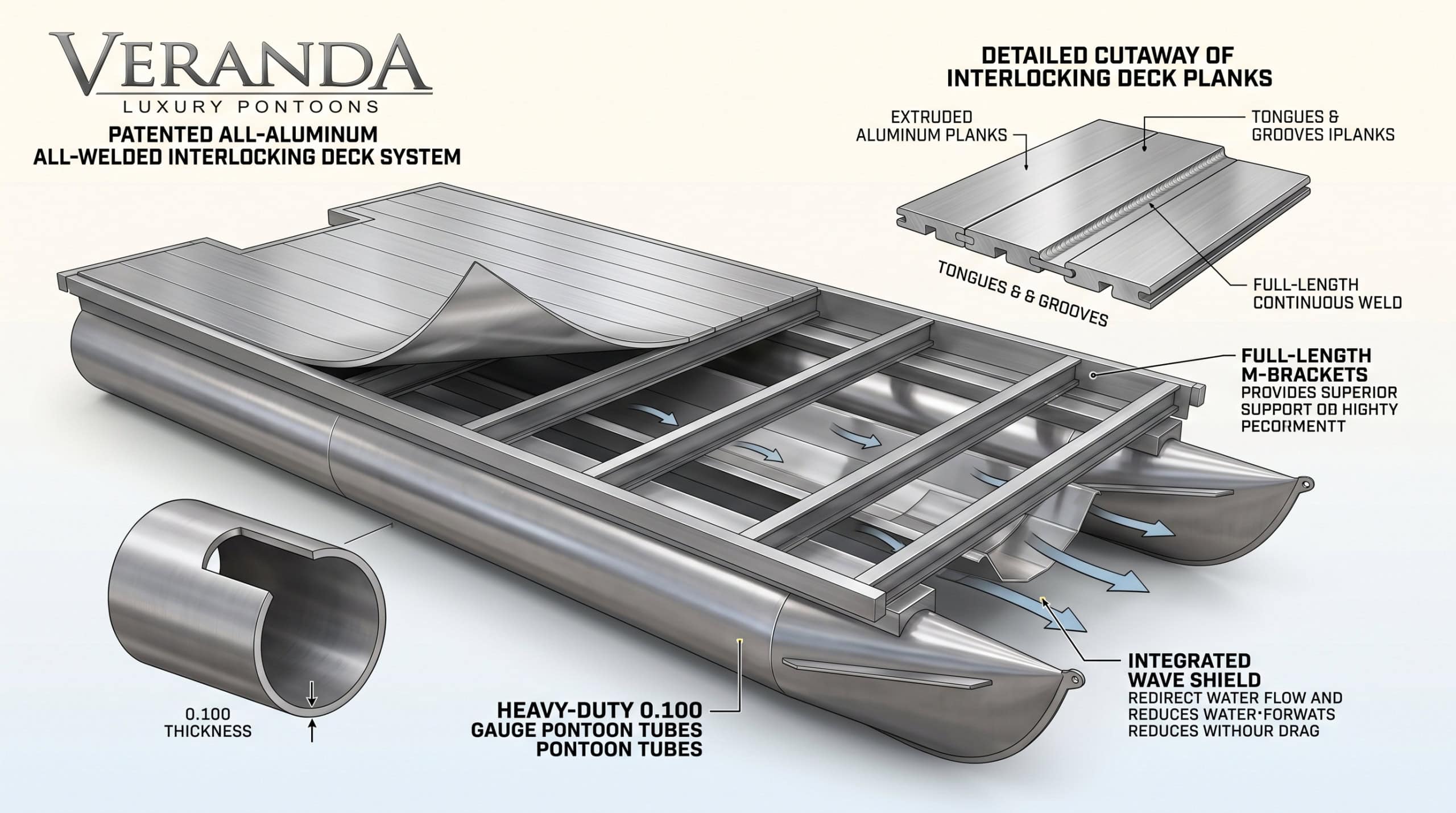
An all-welded aluminum pontoon deck resists moisture, rot, and mold in ways a plywood deck cannot, since wood substrates absorb water and deteriorate over time. Aluminum construction also reduces drag with a smooth underside, eliminates the noise created by screws and cross members, and in direct testing measured over 15 degrees cooler than a comparable wood deck.
Core Construction Differences
The case for aluminum over wood comes down to specific, testable construction attributes:
- All-Welded Interlocking Deck
- 2×6 Aluminum Plank Construction
- Uni-Body Foundation
- Smooth, Obstruction-Free Underside
- Chambered, Pressure-Tested Pontoons
- Capped, Welded M-Deck Brackets
- Aluminum Deck Mounting Surface
- Lifetime Structural Warranty
Aluminum vs. Wood Deck Comparison
| Attribute | Wood/Plywood Deck | All-Aluminum Welded Deck |
|---|---|---|
| Mounting Surface | Weak; bolts create moisture entry points | Durable; fasteners resist loosening |
| Deck Joinery | Screwed/bolted, cross members | Welded, interlocking, uni-body |
| Underside Drag | Increased (protruding cross members) | Reduced (smooth, obstruction-free) |
| Noise | Increased (wood, screws, cross members) | Eliminated |
| Moisture/Rot Risk | High over time | None (no wood substrate) |
| Deck Surface Temp (tested) | Baseline | Over 15°F cooler |
| Weight Over Time | Increases (moisture absorption) | Stable |
| Structural Baffles | Not specified | Up to 5 per pontoon |
| Structural Warranty | Not specified | Lifetime Structural Warranty |
| Interior Space vs. Category Avg. | Baseline | 10%+ larger |
Why Aluminum Runs Cooler
Extruded aluminum planks allow air to move beneath the deck surface, which helps cool it during hot weather. In a side-by-side test using similar colored vinyl flooring, an all-aluminum welded deck measured over 15 degrees cooler than a competitor’s wood deck, a meaningful difference for anyone walking barefoot on deck.
Why Wood Decks Fail Over Time
Plywood decks appear sound at the time of purchase, free of moisture, rot, or mold. Over time, the substrate absorbs water, begins rotting, separates, and molds. Driving a larger bolt through this porous material does not add strength; it simply creates a bigger hole for moisture to enter.
Structural Reinforcement
Aluminum pontoons use chambered, pressure-tested tubes with up to five structural baffles each for added strength and rigidity. The M-deck brackets connecting pontoon to decking are capped and welded over, providing support designed to handle the stress placed on the hull by today’s larger outboard engines.
Frequently Asked Questions
Is an aluminum pontoon boat better than a wood-decked one?
An all-welded aluminum pontoon deck resists moisture, rot, and mold in ways a plywood deck cannot, since wood substrates absorb water and deteriorate over time. Aluminum construction also reduces drag with a smooth underside, eliminates the noise created by screws and cross members, and in direct testing measured over 15 degrees cooler than a comparable wood deck.
Do aluminum pontoon boat decks get hotter than wood decks?
No, aluminum pontoon decks do not get hotter than wood decks. In a direct comparison test using similar colored vinyl flooring, an all-aluminum welded deck measured over 15 degrees cooler than a competitor’s wood deck, aided by extruded aluminum planks that allow air movement to cool the surface.
Are aluminum pontoon boats noisier than wood-decked pontoons?
No, an all-welded aluminum interlocking deck system is engineered without screws and without cross members, which eliminates the noise typically created by wood, screws, and cross member construction found on competitor decks.
Why do wood pontoon decks fail over time?
Wood pontoon decks are void of moisture, rot, and mold only at the time of purchase. Over time the plywood substrate absorbs water, begins rotting, separates, and molds, while bolts driven through the porous material create additional entry points for moisture rather than adding structural strength.