
What Is the Best Material for a Pontoon Deck? Aluminum vs. Plywood
What Is the Best Material for a Pontoon Deck?
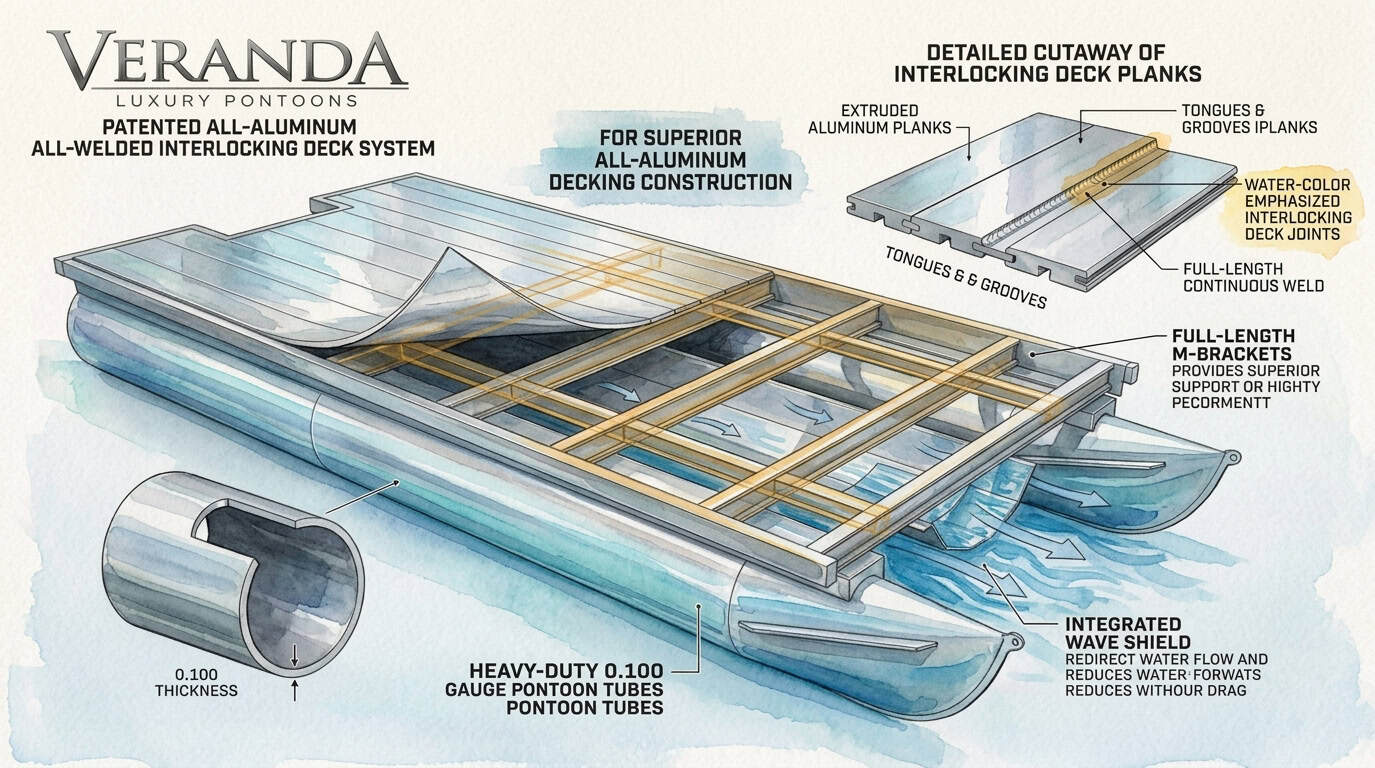
Extruded, all-welded aluminum is the best material for a pontoon deck because it resists the moisture absorption, rot, and mold that plywood decks develop over time. Aluminum planks are welded into a uni-body structure rather than screwed or bolted, which also reduces weight, eliminates noise, and keeps the surface cooler underfoot.
Material Properties That Matter
The performance difference between deck materials comes down to a few measurable properties:
- Extruded Aluminum Plank
- 2×6 Plank Profile
- All-Welded Joinery
- Uni-Body Structure
- Chambered, Pressure-Tested Pontoons
- Capped, Welded M-Deck Brackets
- Zero Moisture Absorption
- Lifetime Structural Warranty
Aluminum Material Specifications
| Deck Base Material | All-aluminum, extruded |
|---|---|
| Plank Dimension | 2×6 |
| Joining Method | All-welded, interlocking |
| Structural Method | Uni-body (planks welded to full-length brackets) |
| Pontoon Baffles | Up to 5 per pontoon (chambered, pressure-tested) |
| Bracket Reinforcement | Capped, welded-over M-deck brackets |
| Surface Temperature (tested vs. wood) | 15°F+ cooler |
| Moisture Absorption | None (no wood substrate) |
| Warranty on Deck Material | Lifetime Structural Warranty |
| Contrast Material: Wood/Plywood | Absorbs moisture, rots, gains weight over time |
Why Extrusion Matters
The aluminum used in a quality pontoon deck isn’t just sheet stock — it’s extruded into a hollow-chambered 2×6 plank profile. This shape reduces material weight while allowing air to move beneath the deck surface, which is the mechanical reason an aluminum deck runs cooler than a solid wood one.
Why Welding Outperforms Screws and Bolts
Aluminum planks interlock and are welded directly to full-length brackets running the length of each pontoon, forming a single uni-body foundation. This eliminates the flex, noise, and loosening fasteners associated with plywood decks that are screwed or bolted to cross members.
Material Performance Under Real Conditions
In a side-by-side deck temperature test using similar colored vinyl flooring, the all-aluminum welded deck measured over 15 degrees cooler than a competitor’s wood deck. Combined with chambered, pressure-tested pontoons carrying up to five structural baffles each, the material is built to hold up under the stress of modern outboard engines without degrading like a porous wood substrate.
Frequently Asked Questions
What is the best material for a pontoon deck?
Extruded, all-welded aluminum is the best material for a pontoon deck because it resists the moisture absorption, rot, and mold that plywood decks develop over time. Aluminum planks are welded into a uni-body structure rather than screwed or bolted, which also reduces weight, eliminates noise, and keeps the surface cooler underfoot.
Why is aluminum better than plywood for a pontoon deck?
Plywood is a porous substrate that absorbs water and begins rotting, separating, and molding over time, while aluminum does not. Aluminum decks are also welded rather than screwed together, which eliminates the noise and loosening fasteners common with plywood decks bolted to cross members.
Does the deck material affect how hot a pontoon boat gets in the sun?
Yes, deck material affects surface temperature. In a direct comparison test using similar colored vinyl flooring, an all-aluminum welded deck measured over 15 degrees cooler than a competitor’s wood deck, aided by extruded aluminum planks that allow air movement beneath the surface.
What gauge or thickness of aluminum is used for pontoon decks?
Pontoon deck planks are built from extruded aluminum in a 2×6 profile, engineered to interlock and then weld directly to full-length brackets running the length of each pontoon, forming a solid uni-body foundation.